
Satin vs Silk Which Is Better for Nightwear in Pakistan?
Satin vs Silk Which Is Better for Nightwear in Pakistan? This question often comes up when choosing a night dress, lingerie set, or bridal robe. Both fabrics can look smooth and glossy, but their names describe different things. Silk is a natural fibre, while satin is a weave that can use silk, polyester, or other fibres. Knowing this difference helps you compare comfort, quality, care needs, and price before buying. This guide explains what to consider for Pakistan’s changing seasons. For a wider comparison that includes cotton, modal, and viscose, explore our guide to the best night dress fabrics for women.
What Is the Difference Between Satin vs Silk?
Silk comes from silkworm cocoons and can form several types of fabric. Satin describes how threads weave together, so manufacturers can make it from silk, polyester, or other fibres. This means a garment can be both silk and satin. For shoppers comparing affordable satin nightwear with genuine silk, the more useful comparison is usually polyester satin vs silk satin. Always check the fibre composition rather than judging by the product name alone.
What Is Silk Fabric?
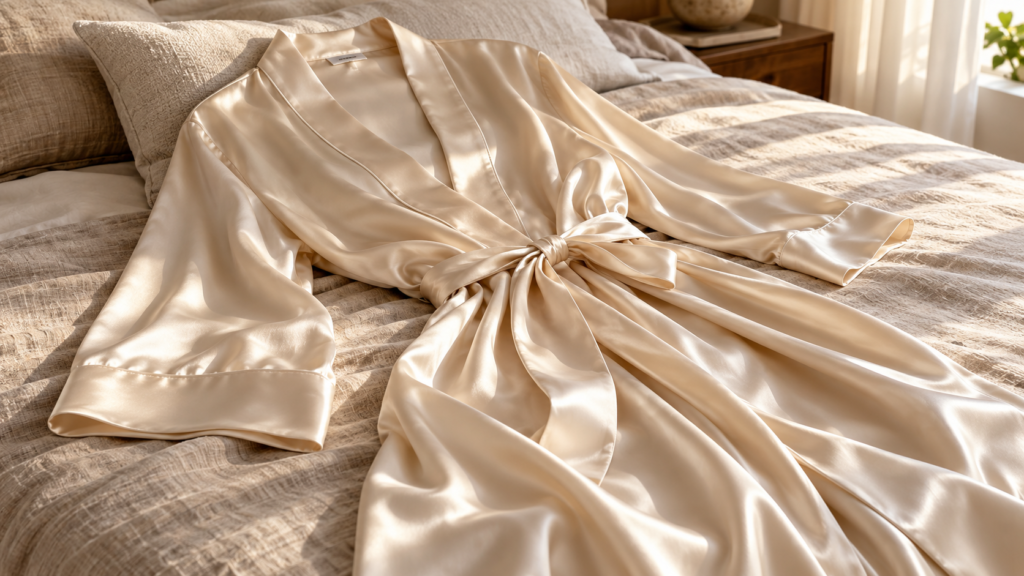
Silk is a natural protein fibre valued for its smooth feel and drape. Different silk fabrics have different textures, weights, and finishes, so not every silk nightdress looks equally shiny. Silk satin and charmeuse often have a glossy face with a duller reverse. When buying silk sleepwear, look for clear fibre percentages. A silk blend contains another material, while descriptions such as “silky” or “silk touch” do not confirm genuine silk content.
What Is Satin Fabric?
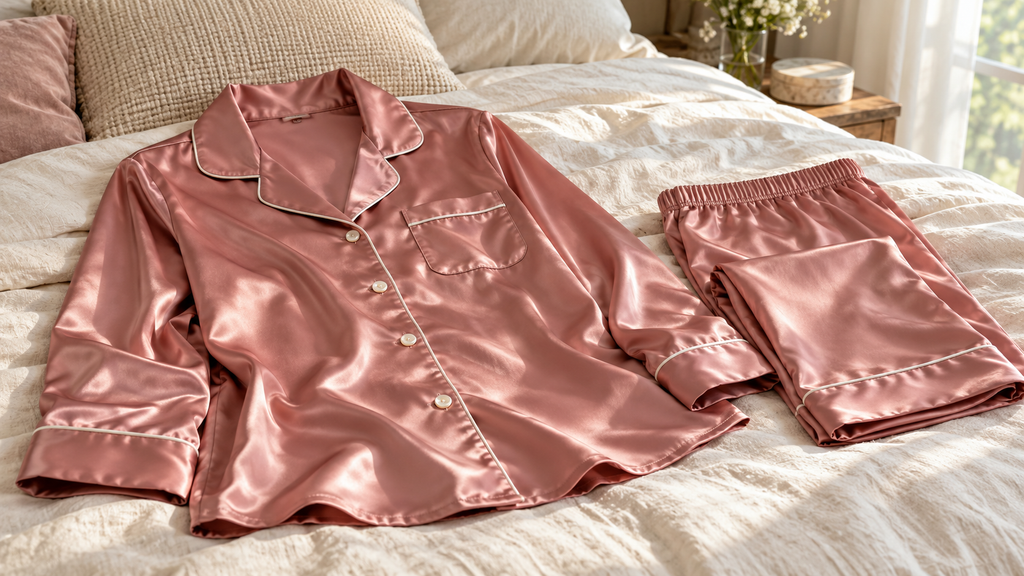
Satin fabric has a smooth face created by threads passing over several other threads before interlacing. This construction produces its familiar shine and flowing appearance. You will often find satin in camisole sets, pajama suits, robes, and women’s nightwear. However, the weave alone does not tell you how absorbent or comfortable the garment will feel. A polyester satin night suit and a silk satin robe may share a glossy finish but behave differently during wear and washing.
Satin vs Silk: A Quick Comparison
Because satin can contain silk, this table compares polyester satin with silk satin.
| Feature | Polyester Satin | Silk Satin |
|---|---|---|
| Fibre source | Synthetic polyester | Natural silk |
| Appearance | Smooth, often glossy | Smooth, often lustrous |
| Moisture absorption | Low | Higher than polyester |
| Price tendency | Usually more affordable | Usually more expensive |
| Care | Often simpler; check label | Often requires gentler care |
| Suitable uses | Nightwear, robes, lingerie | Nightwear, robes, lingerie |
Which Feels More Comfortable for Sleeping?
Comfort depends on more than a soft surface. Fabric weight, weave density, garment fit, and room temperature all matter. Silk absorbs more moisture than polyester, but that does not guarantee that every silk garment feels cooler. Likewise, lightweight polyester satin may feel comfortable to one person and clingy to another. For everyday sleepwear, check the inside seams, waistband, and room around your shoulders and hips. A loose cut can change the wearing experience considerably.
Which Works Better in Pakistan’s Summer?
For summer nightwear in Karachi, Lahore, or Multan, consider heat and humidity alongside appearance. A lightweight, loose garment may feel more practical than a thick or tightly fitted set. Polyester absorbs little moisture, although drying and moisture movement also depend on fabric construction. Silk may suit shoppers who prefer its feel, but avoid treating it as a guaranteed cooling fabric. If you tend to feel warm while sleeping, compare cotton or modal nightwear as well.
What About Winter and Air-Conditioned Rooms?
A shiny surface does not tell you how warm a night suit will be. During cooler evenings in Islamabad or Rawalpindi, thin silk and lightweight satin may both need an extra layer. A robe lets you adjust coverage without changing your whole outfit. For an air-conditioned bedroom, consider sleeve length and fabric thickness before choosing. If warmth is your main priority, compare heavier sleepwear materials rather than selecting silk or satin solely for their appearance.
Silk vs Satin Nightwear Prices in Pakistan
Genuine silk nightwear generally costs more than polyester satin because the materials and production processes differ. However, stitching, design, lining, and brand also influence the final price. When comparing a silk night suit price in Pakistan with a satin alternative, check that both listings clearly identify their fabric. Review the number of included pieces and delivery charges too. A higher price or polished photograph alone cannot prove that a garment contains real silk.
Choosing Bridal and Honeymoon Nightwear
Both fabrics can create a coordinated bridal nightwear look. Polyester satin offers an option for shoppers who want glossy matching pieces within a smaller budget. Silk satin may appeal if you prefer genuine silk and accept its care requirements. For a honeymoon wardrobe, consider how often you will wear each piece and how you will wash it. Check robe coverage, camisole length, and adjustable features rather than choosing a set only for its colour or shine.
How to Wash Silk and Satin Nightwear
Follow the care label for the finished garment, including its lace, trims, and lining. Some pieces allow gentle washing, while others require specialist cleaning. Do not assume every satin set is machine washable or every silk item needs the same treatment. If hand washing is permitted, avoid rough scrubbing and twisting. Keep delicate garments away from exposed hooks and zips, and follow the stated drying instructions to help preserve their shape and finish.
What Should You Check Before Buying Online?
When shopping for women’s nightwear online in Pakistan, ask for the fibre composition if the listing only says “satin” or “soft silk.” Compare your measurements with the product’s size chart and check the exchange policy before ordering. Close-up fabric photographs can show texture, but they cannot reliably prove fibre content. Choose polyester satin if its price, feel, and care suit your routine, or silk satin if genuine silk is your preference and fits your budget.
Conclusion
Choosing between satin vs silk for nightwear in Pakistan comes down to fabric content, comfort, care, and budget. Silk is a natural fibre, while satin is a weave that can use silk, polyester, or other fibres. Check the composition label to understand what you are buying, and consider the season and your room temperature before choosing. The outfit’s shape matters too. If you are unsure which style suits your routine, explore our night dress vs night suit in Pakistan guide to compare both options. Choose nightwear that fits comfortably and suits your daily care routine.
What is the difference between satin and silk nightwear?What is the difference between satin and silk nightwear?
Silk is a natural fibre, while satin is a weave that creates a smooth, glossy surface. Satin nightwear can contain silk, polyester, or other fibres, so check the fabric label before buying.
Is satin or silk better for summer nightwear in Pakistan?
Lightweight silk can feel comfortable in warm weather, while polyester satin may feel warmer or less breathable. However, fabric thickness, fit, and room temperature also affect comfort during Pakistan’s summer.
Why does silk nightwear cost more than polyester satin in Pakistan?
Natural silk production requires more time and work, which usually makes it more expensive. Polyester satin offers a similar glossy look at a lower price. Compare fibre content, stitching, and garment size when checking prices.