
Best Night Dress Fabrics: A Guide to Comfort and Fit
The best night dress fabrics suit your skin, room temperature, and daily routine. Cotton, silk, modal, viscose, and polyester all offer different benefits. However, no single material works best for every season or sleeper.
A smooth finish may catch your eye, but fabric weight, airflow, and washing needs matter too. For example, a lightweight nightdress can feel very different from a thick pajama set made from the same fibre. This guide compares popular nightwear materials to help you choose sleepwear for warm evenings, cooler rooms, and everyday use.
What Makes a Good Night Dress Fabric?
Start with how you want your nightwear to feel. Some people prefer crisp, loose cotton. Others enjoy a smooth surface or fabric that drapes softly around the body.
When comparing fabrics for night dresses, consider:
- Breathability: How easily air moves through the material.
- Moisture absorption: How the fabric takes up moisture.
- Texture: Whether the surface feels smooth, textured, or brushed.
- Weight: How light or substantial the garment feels.
- Care: Whether its washing instructions suit your routine.
Construction matters alongside fibre content. Tight weaves, thick layers, and close cuts can change comfort, even in a familiar material.
Best Night Dress Fabrics Compared
| Fabric | Main qualities | Useful for | What to check |
|---|---|---|---|
| Cotton | Absorbent, with many lightweight options | Everyday nightwear | Shrinkage and fabric thickness |
| Silk | Smooth surface and fluid drape | Occasion wear and light sleepwear | Washing instructions and price |
| Modal | Often soft with a flexible drape | Relaxed nightdresses | Blend and garment construction |
| Viscose | Absorbent and often flowing | Loose nightwear | Wet handling and shrinkage |
| Polyester | Often quick-drying and crease-resistant | Easy-care options | Heat retention and skin feel |
| Flannel | Brushed surface that holds warmth | Cooler nights | Fibre content and weight |
Use this comparison as a starting point. The finished garment can feel different depending on its weave, knit, lining, and fit.
Cotton: A Practical Everyday Option
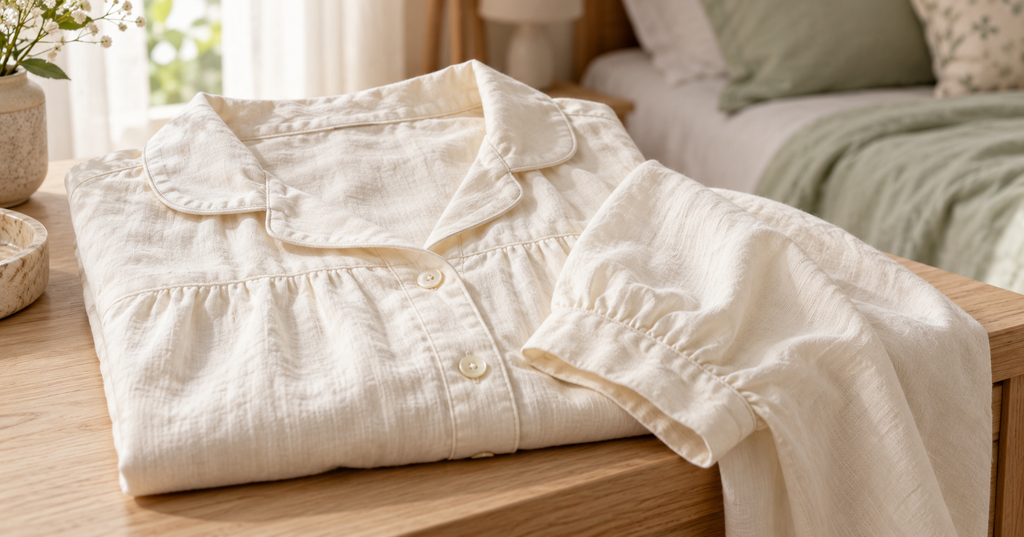
Cotton nightwear is a familiar choice for daily use. Cotton absorbs moisture, and lightweight constructions can allow airflow around the body. For warm evenings, look for a loose cotton nightdress rather than assuming every cotton garment feels cool. Thick cotton jersey and lightweight woven cotton have different weights and textures. Cotton may crease or shrink, depending on its finish and care. Follow the label and leave enough room for comfortable movement. If you want washable sleepwear for regular rotation, cotton is a useful fabric to compare first.
Silk: Smooth Fabric with Extra Care Needs
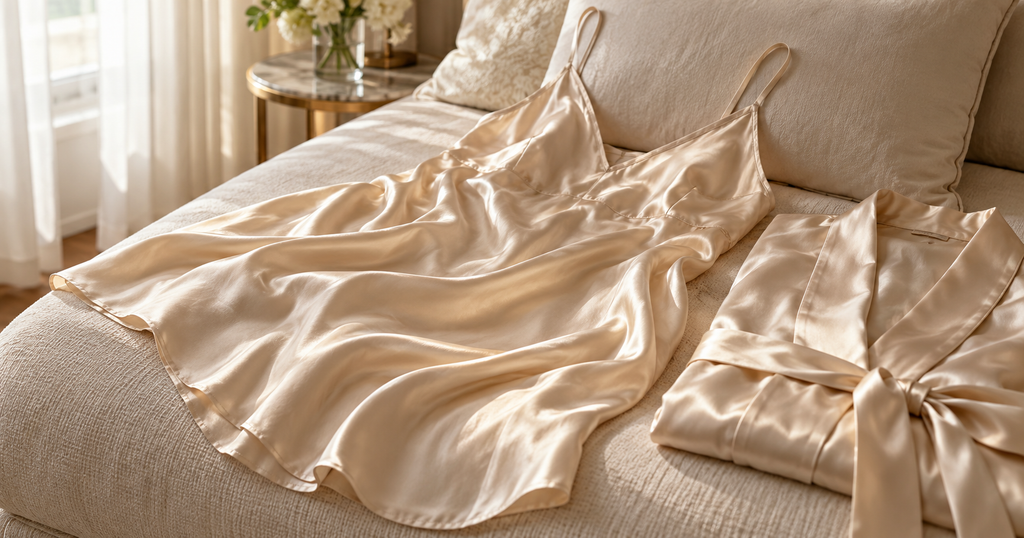
Silk nightwear offers a smooth surface and a flowing drape. It can suit shoppers who enjoy lightweight fabric with a more dressed-up appearance. However, silk quality, thickness, and construction vary. A delicate silk camisole will not feel the same as a lined silk robe. Check the fibre label before paying for silk sleepwear. Terms such as “silky” or “silk feel” describe appearance or texture; they do not confirm silk content. Also, review the washing instructions. Some silk garments need hand washing or specialist cleaning, which adds to their ongoing care.
Satin: Check the Fibre Behind the Shine

Satin is a weave, not a fibre. A satin nightdress may contain silk, polyester, or another material, so the name alone cannot explain its comfort. Polyester satin often offers a glossy look at a lower price than silk satin. However, the two materials can differ in moisture absorption, feel, and care.
When comparing silk versus satin nightwear, first identify what the satin contains. A useful comparison is silk satin versus polyester satin. Choose by composition and construction rather than shine alone, especially when shopping for summer sleepwear.
Modal and Viscose: Softness and Drape
Modal and viscose belong to the regenerated cellulose fibre family. Manufacturers process cellulose into fibres that can create soft, flowing fabrics. Modal nightwear often has a smooth feel and flexible drape. Viscose nightdresses can also hang loosely, making them worth comparing if you dislike stiff fabric. Still, these labels do not guarantee identical quality. Fabric weight, blends, stitching, and finishing affect the final garment. Check care instructions carefully. Some viscose garments need gentle washing and careful handling while wet. A soft fabric is only practical if its maintenance fits your routine.
Polyester and Blended Nightwear
Polyester appears in many night suits, satin sets, and stretch fabrics. It often dries quickly and resists creasing, although performance varies by construction. Some shoppers find certain polyester fabrics warm or less pleasant against damp skin. Others prefer their smooth feel and simpler care.
Blends combine different fibres. For example, cotton-polyester nightwear may balance cotton’s absorbency with polyester’s crease resistance A small amount of elastane adds stretch, but it does not automatically improve breathability. Read the percentages and consider how closely the garment fits.
Choosing Fabrics for Pakistan’s Weather
For hot weather in Karachi or Lahore, compare lightweight cotton, modal, and viscose nightwear. Look for loose cuts, limited lining, and fabric that feels comfortable against your skin.
Absorbency and moisture-wicking are different qualities. A fabric that absorbs sweat does not necessarily move it away quickly or dry fast.
For cooler nights in Islamabad, brushed cotton flannel or heavier knits may feel more suitable. Flannel describes a fabric construction and finish, so check its fibre content too.
In an air-conditioned room, a removable robe can help you adjust warmth without changing your whole outfit.
How to Compare Price and Quality
Compare more than the displayed price when buying a women’s nightwear set. Check fibre composition, seams, fabric weight, and washing requirements. If you are also deciding on a style, explore our guide to the different types of nighty dresses for women to help narrow down your options.
If two products have similar names but different prices, look for differences in material content and construction. A glossy photograph cannot confirm fabric quality.
Also, consider cost per wear. Nightwear you enjoy wearing and can care for easily may offer better value than an outfit that stays unused. Before ordering online, review measurements, delivery charges, and exchange terms. A suitable fit helps you judge the fabric fairly.
Frequently Asked Questions Best Nighty Dress Fabric
Which night dress fabric is best for summer?
Lightweight cotton, modal, and viscose are useful options to compare. Choose a loose garment and consider its thickness, lining, and your room temperature.
Is cotton better than polyester for nightwear?
It depends on your priorities. Cotton absorbs moisture, while polyester often dries faster and creases less. Compare the actual garment’s feel, weight, and care needs.
Does satin nightwear always contain silk?
No. Satin is a weave and can use several fibres. Check the composition label to see whether the garment contains silk, polyester, or another material.
Which fabric should I choose for sensitive skin?
Start with a smooth fabric you already tolerate. Check seams, trims, dyes, and washing products too. Stop wearing any garment that irritates.